Research Projects
I study the changing hydrological cycle, with a focus on hydroclimatic extremes, their drivers, and associated societal risks. My research improves the predictability of extreme hydroclimatic events while assessing their long-term changes through the integration of multi-source datasets and Earth system models
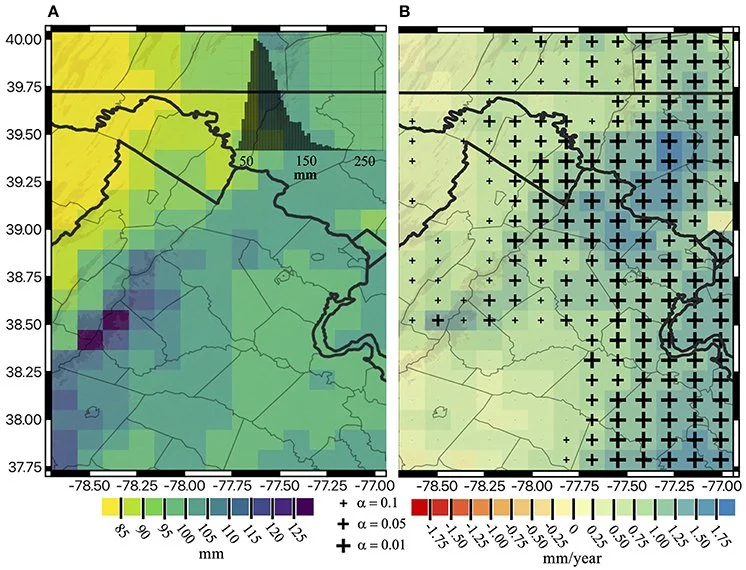
Extreme precipitation trends in Southern Mid-Atlantic US
The investigation of regional vulnerability to extreme hydroclimatic events (e.g., floods and hurricanes) is quite challenging due to its dependence on reliable precipitation estimates. Better understanding of past precipitation trends is crucial to examine changing precipitation extremes, optimize future water demands, stormwater infrastructure, extreme event measures, irrigation management, etc., especially if combined with future climate and population projections. The objective of the study is to investigate the spatial-temporal variability of average and extreme precipitation at a sub-regional scale, specifically in the Southern Mid-Atlantic United States, a region characterized by diverse topography and is among the fastest-growing areas in North America. This work directly addresses urban resilience to hydrometeorological hazards in the Chesapeake Bay watershed.
Read more on this project: https://thrivingearthexchange.org/project/northern-virginia-va/, Dollan et al., (2022)
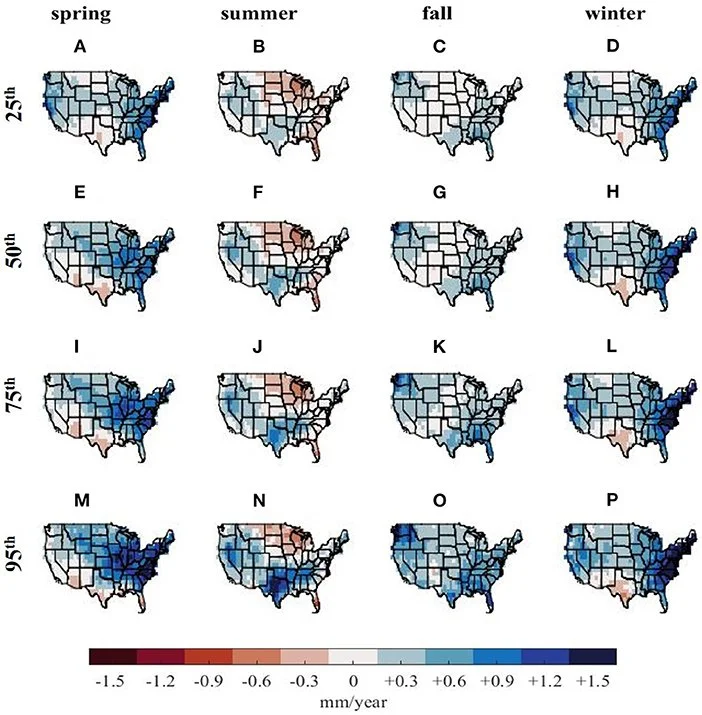
Projected trends in daily precipitation climatology and extremes in large ensemble climate model
Changes in precipitation patterns vary spatially, making it essential to understand the regional distribution of future extremes at various percentiles for local to regional scale flood and drought adaptation as well as agricultural infrastructure planning. Specifically, we address the following questions;
How is future precipitation expected to vary seasonally in extreme indices across quantiles in the twenty-first century?
Which quantiles are more likely to drive future precipitation changes?
What changes in precipitation are likely to occur at the regional scale, and what are the associated uncertainties?
Read more: Dollan et al., (2022), Coelho et al., (2022)
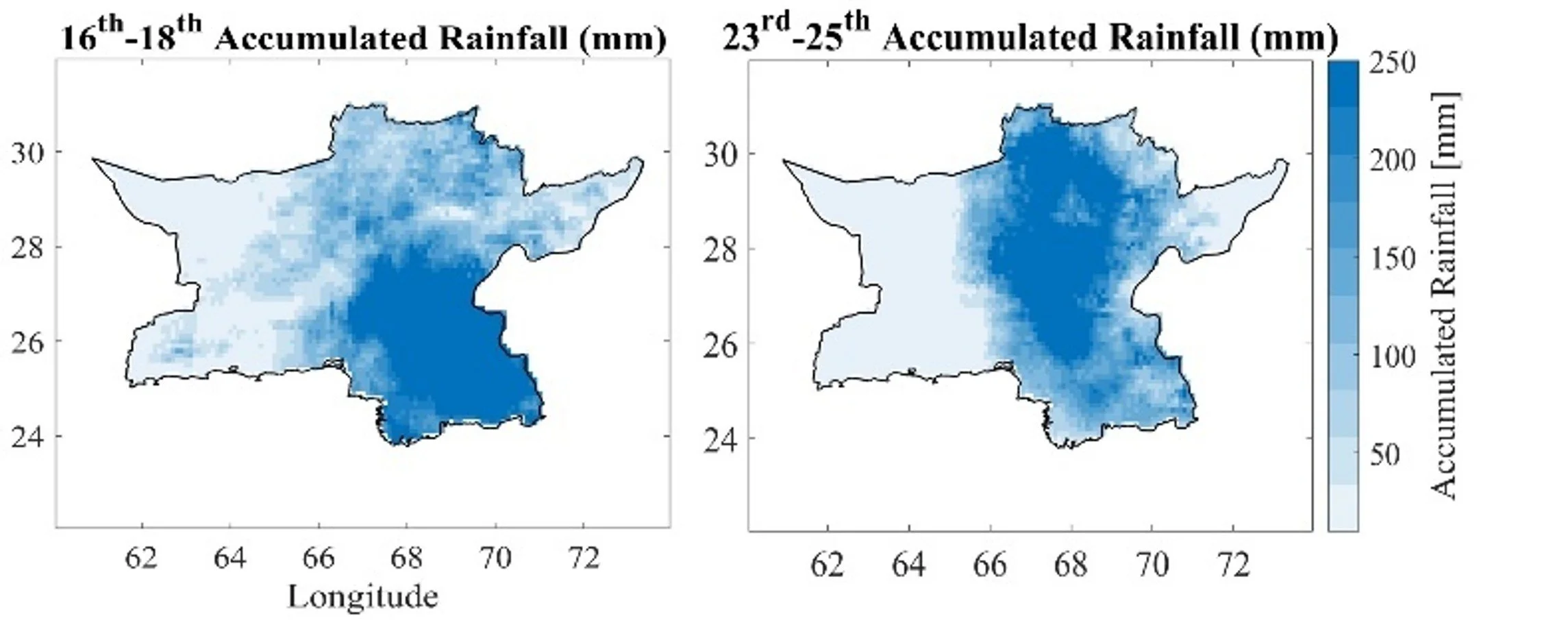
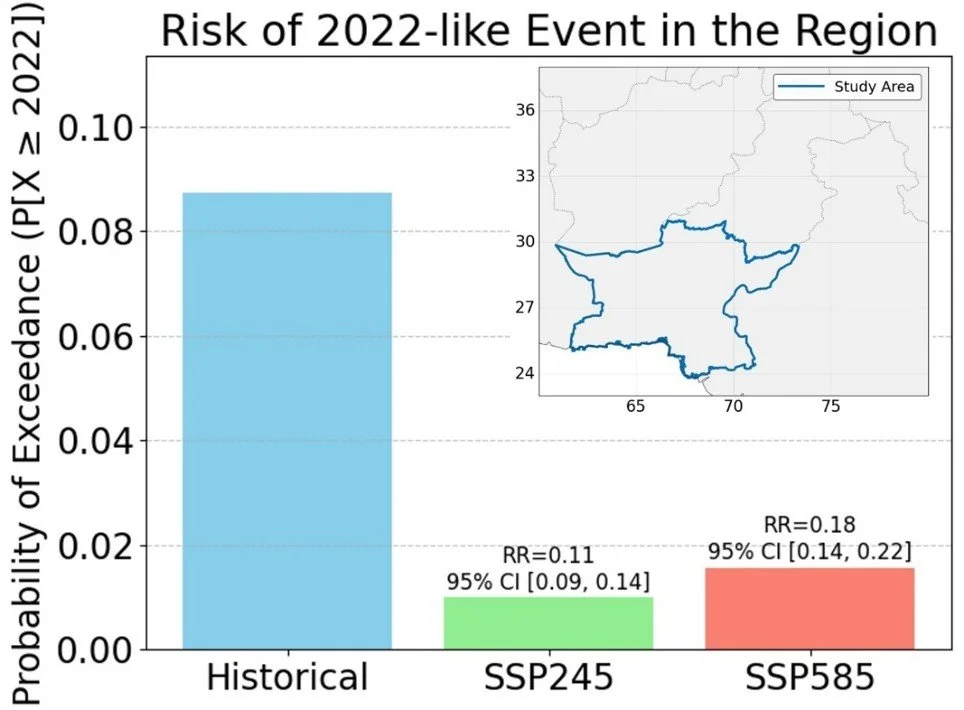
Risk of hydroclimatic extremes: a case study of heavy rainfall in Southern Pakistan
South Asia is highly susceptible to the impacts of hydroclimatic extremes, with unusual monsoon precipitation heightening the risk of severe flooding in arid coastal regions. This study investigates the rainfall characteristics of the unprecedented multiday wet spell of 2022 in southern Pakistan, particularly in the Sindh and Balochistan Provinces. Additionally, the study examines how future climate scenarios may alter the frequency of multiday extreme monsoon precipitation in this data-scarce region. By leveraging satellite estimates alongside bias-corrected and downscaled GFDL SPEAR large-member ensembles, I quantified the attribution of extreme events such as the 2022 Pakistan floods. Regionally, the probability of a 2022-like event may decline to 22% of the historical likelihood under the highest-emission scenario, SSP5-8.5.
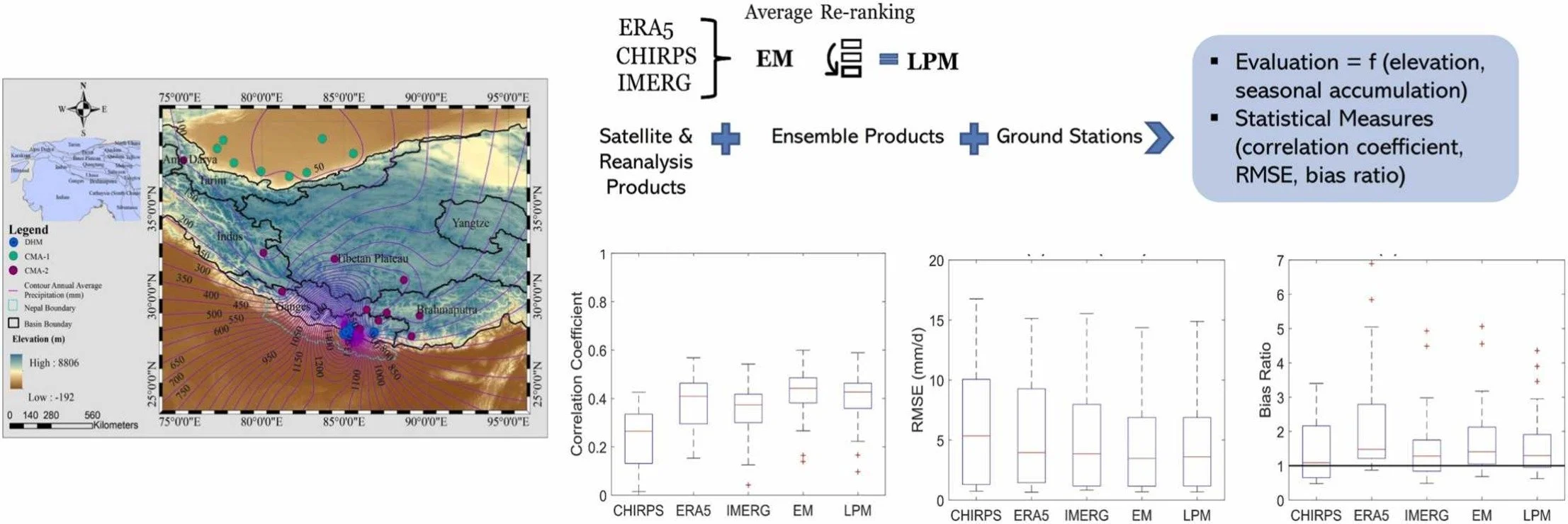
Assessing the performance of multi-source precipitation products in High Mountain Asia
The lack of global in-situ observations makes it challenging in studying diverse climate zones. My evaluation of a suite of products in the Himalayan region shows (published in the Journal of Hydrology – Regional Studies and the Journal of Hydrometeorology) that by combining multi-source dataset into an ensemble product has the potential to reduce random errors and increase the correlation with ground observations.
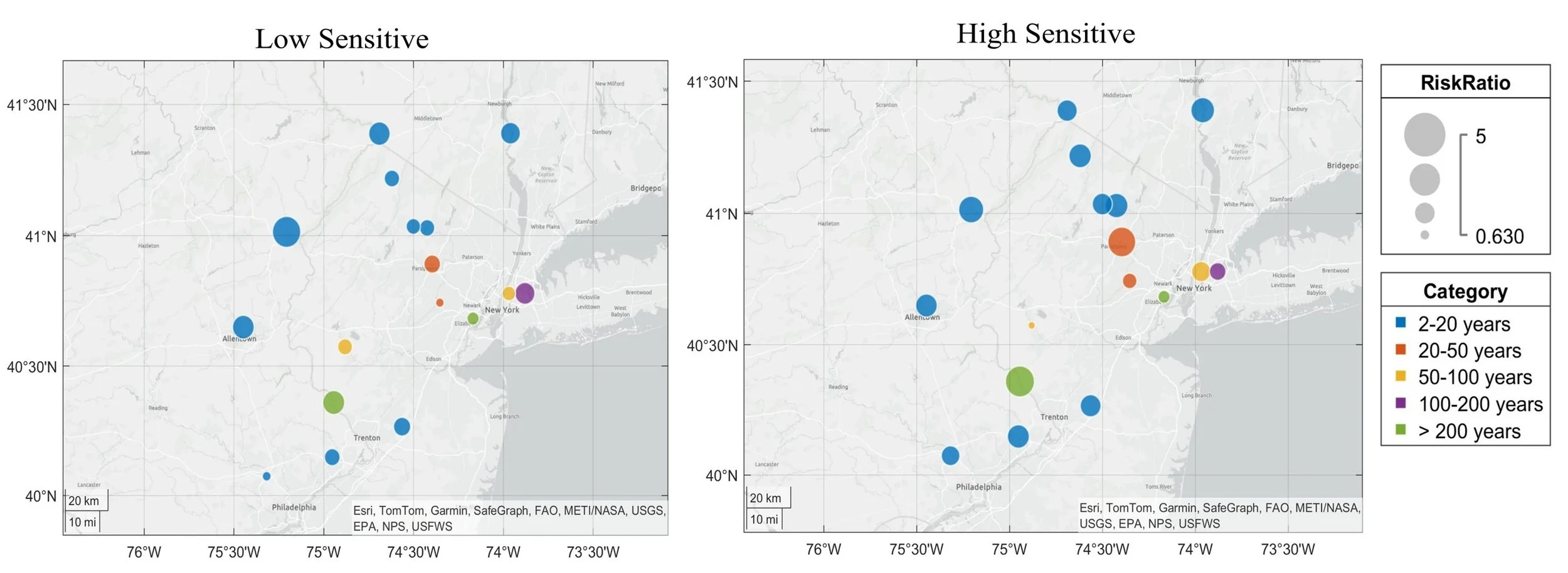
Tropical storm rainfall in warmer climates
Gaining continued insights into the impact of global warming on the hurricane-associated occurrence of intense record downpours is essential for building climate resilient communities. This study investigates projected future changes of extreme rainfall over the Northeast United States as represented by extreme daily amounts during Hurricane Ida in 2021. I employed a nonstationary extreme-value framework to create probabilistic storylines of Hurricane Ida-like (2021) precipitation in the Northeast, showing that the late 21st century Ida-like events become two to five times more likely under SSP5-8.5.
The principal research questions addressed in this study are:
1) How rare was Ida’s remnant over the NE US in the observational records?
2) How often does this type of event occur in future?
Storyline-Based Assessment of Warming Impacts on Rainfall from Hurricane Helene (2024)
Investigating historical high-impact tropical cyclones (TCs) and associated record precipitation events remains as important as ever. Assessing potential changes in these compound extremes under plausible future climates can help inform communities in coastal regions, increasing resilience. This study adopts hindcasting ensemble simulations that uses the Community Atmosphere Model (CAM) of the Community Earth System Model (CESM) and its variable resolution capabilities, with grid spacings of 28 km over North Atlantic basin, to investigate TC precipitation in present day and future simulations. Such future simulations account for warming signals for 2, 3 and 4 K global average surface temperature above the preindustrial levels. These different warming levels are generated by modifying thermodynamic initial conditions such as air temperature, specific humidity, and sea surface temperature using the CESM large ensemble.
How do thermodynamic changes in initial condition of the atmosphere impact the characteristics of tropical cyclone-related precipitation?
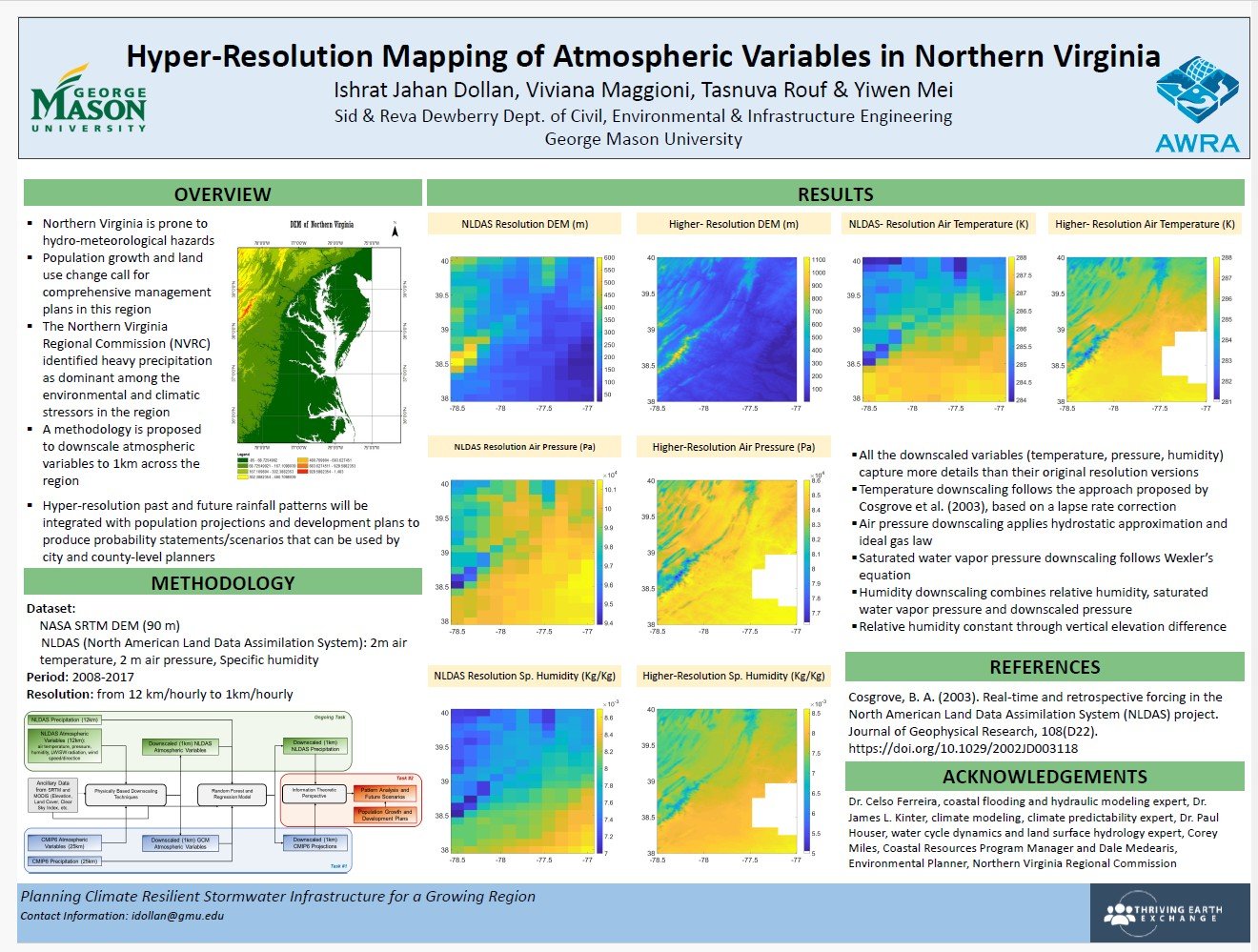
Hyper-Resolution Mapping of Atmospheric Variables in Northern Virginia
Investigating regional vulnerability to extreme hydroclimatic events (e.g., flooding and droughts) poses a challenge to the scientific community and highly depends on our ability to provide reliable precipitation estimates. The primary objective of this research is to investigate trends in precipitation in a fast-growing region, like Norther Virginia (NOVA) at scales (1km) that can help increase regional sustainability and optimize stormwater management planning. A downscaling framework is applied to a set of atmospheric variables from the North American Land Data Assimilation (NLDAS) to 1 km using a combination of physically-based techniques and a machine learning algorithm. Specifically, topographic and lapse rate corrections are chosen to downscale air temperature, pressure, humidity, surface downward longwave and shortwave radiation, and wind velocity.